
Hydraulic Container Lifting Jack
|
Item
|
Specification |
| Main Power Supply |
380V (3-phase)
|
| System Power |
3kW×4, 12kW total
|
| Max Stroke |
1650mm
|
| Cylinder Capacity |
15L
|
| Power Unit Tank Capacity |
25L
|
| Pressure per Leg | 5MPa |
| Ground Requirement |
Hardened surface, concrete grade C15 or above (ground bearing capacity > 15MPa)
|
| Load Capacity | Standard 35 tons, max 40 tons (max load not recommended for continuous use) |
| Dimensions | 1400mm×950mm×2250mm |
| Unit Weight |
Approx. 730kg
|
| Reversing Clearance |
Approx. 2900mm
|
Overview
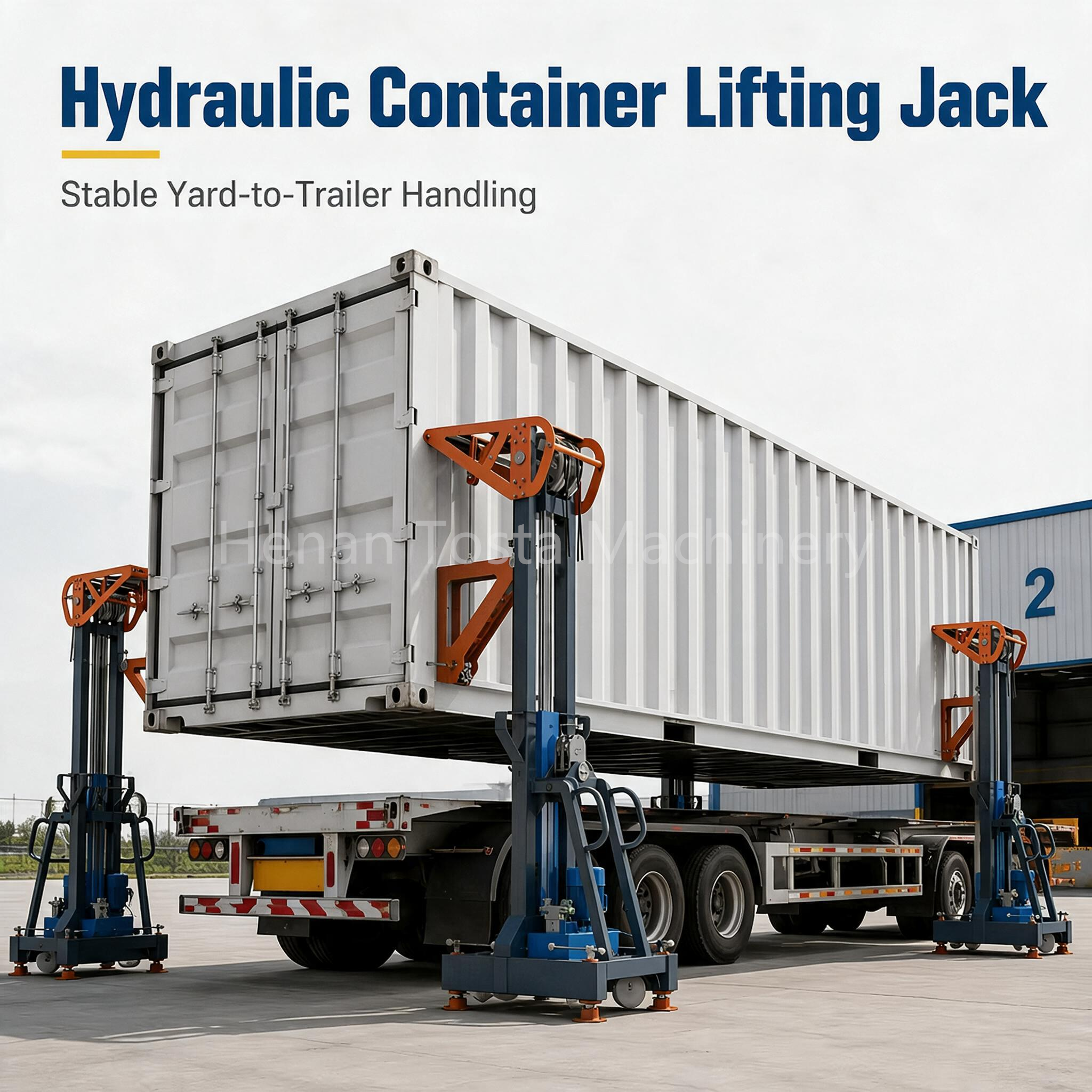
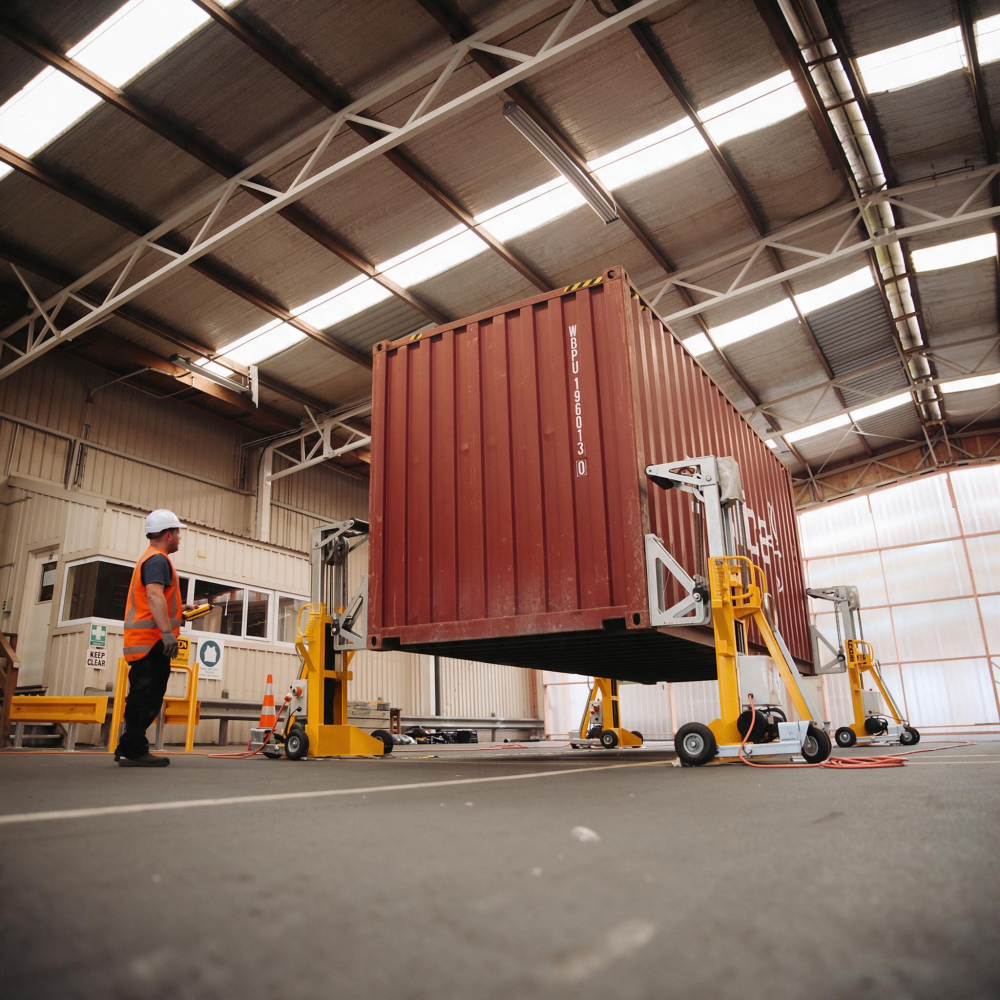
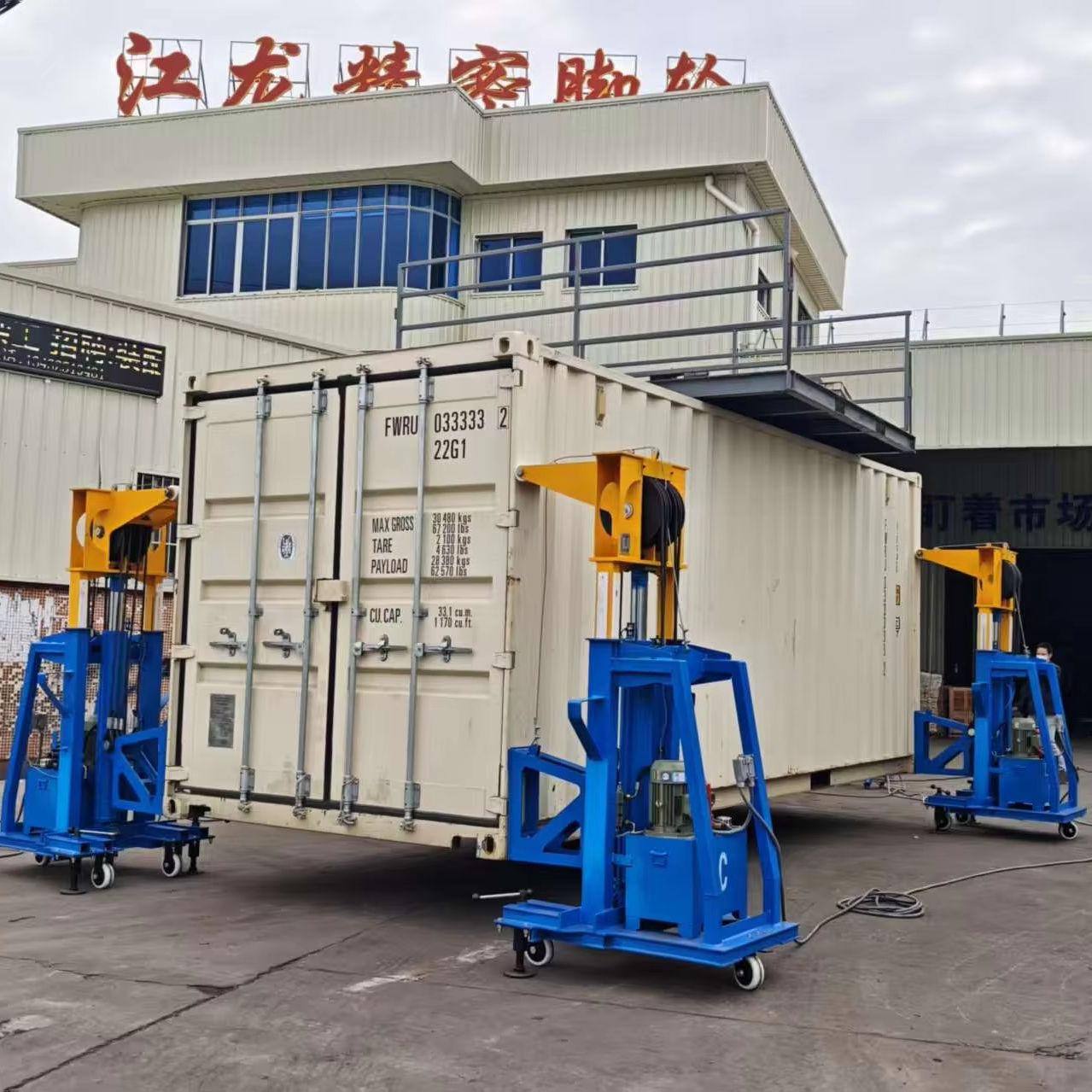
Driven by a centralized power unit feeding the multi-leg hydraulic lifting mechanism, the system is compatible with standard 20ft and 40ft ISO containers as well as modified units such as battery energy storage systems, telecom shelters and modular buildings. It's widely used in logistics transfer, construction sites, emergency deployment and yard/warehouse operations — helping businesses reduce reliance on external cranes and specialist lifting crews and gain full control over container handling.
Advantages of Hydraulic Container Lifting Jack:
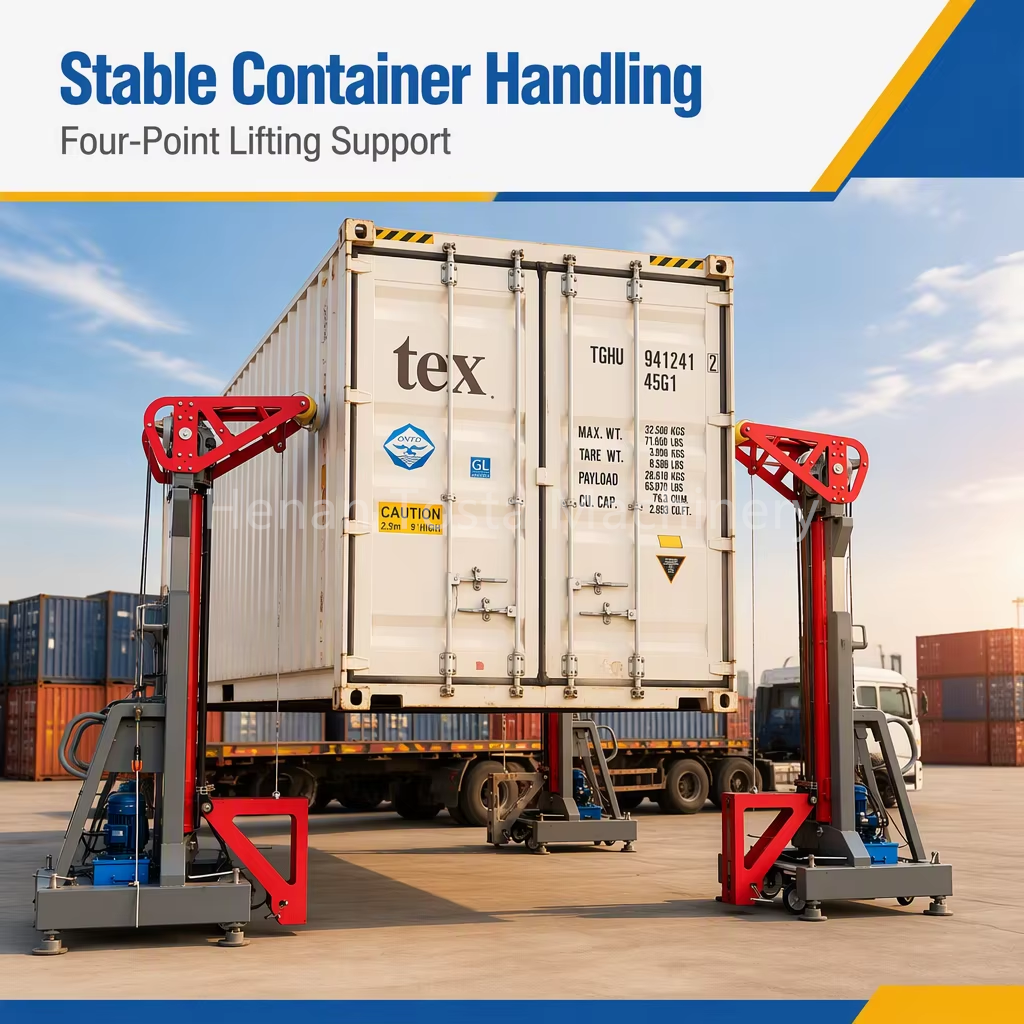
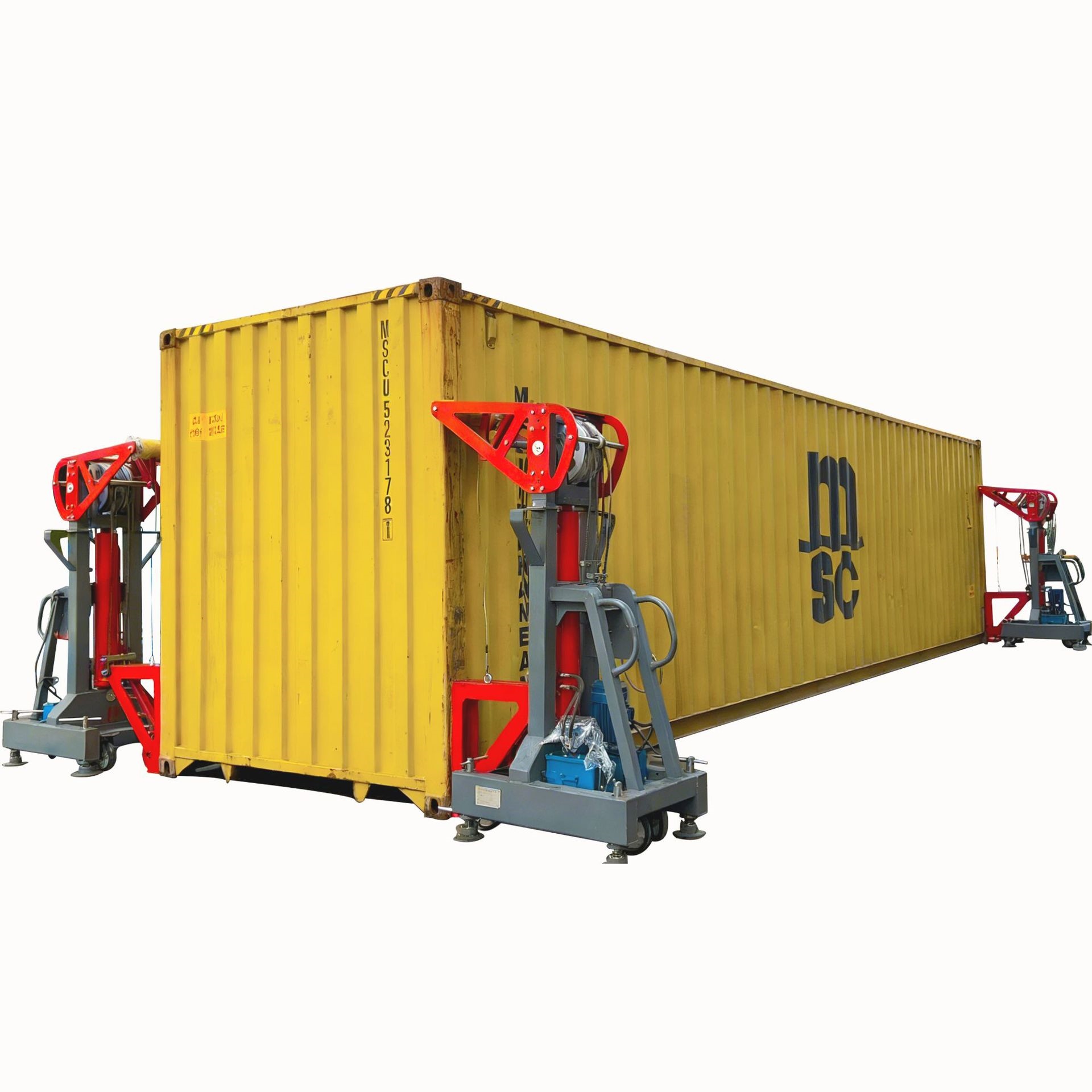
1、Synchronized lifting for a stable ride: All four hydraulic legs draw from a single power unit, keeping the container level throughout the lift and avoiding the tilting or swaying that comes from uneven single-point loading.
2、Long stroke for versatile clearance: A 1650mm max stroke covers a wide range of working heights — from trailer loading/unloading to off-ground inspection and maintenance.
3、Controlled pressure, clear load limits: 5MPa per leg paired with a 35-ton standard rating (40-ton max) gives operators a clear reference point for assessing actual load and avoiding overloading.
4、Compact footprint: At 1400mm×950mm×2250mm and roughly 730kg per unit, the system is easy to move and position on site, even in space-constrained yards or warehouses.
5、No crane, no fixed foundation needed: Any site with a hardened C15+ concrete surface can put the system to work immediately, cutting reliance on external cranes or permanent lifting infrastructure.
6、Practical reversing clearance: An approximate 2900mm clearance lets tractor units pull in and out smoothly, speeding up loading/unloading and reducing on-site coordination time.
Structure of Hydraulic Container Lifting Jack:
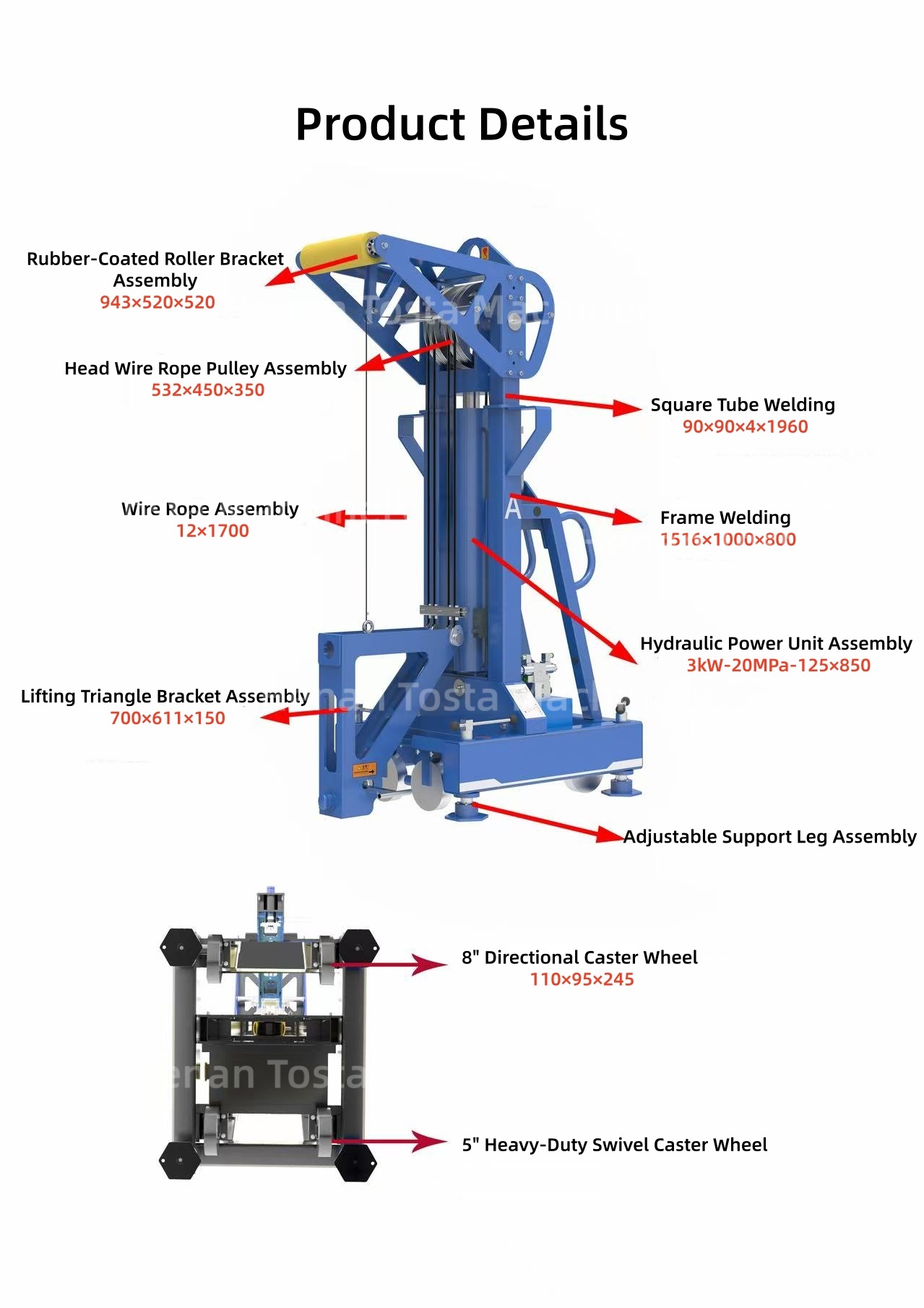
Details of Hydraulic Container Lifting Jack:
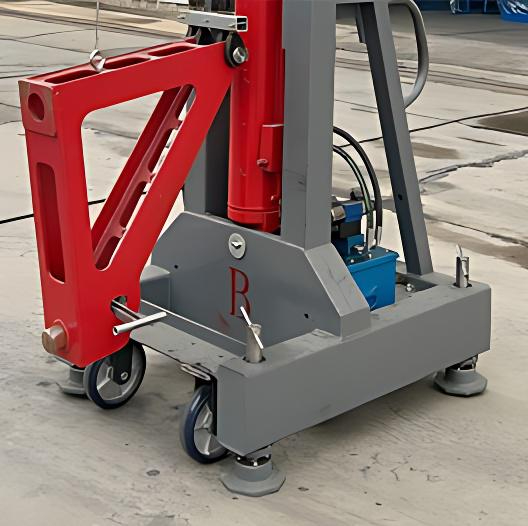
1、More effortless and convenient way to move around:
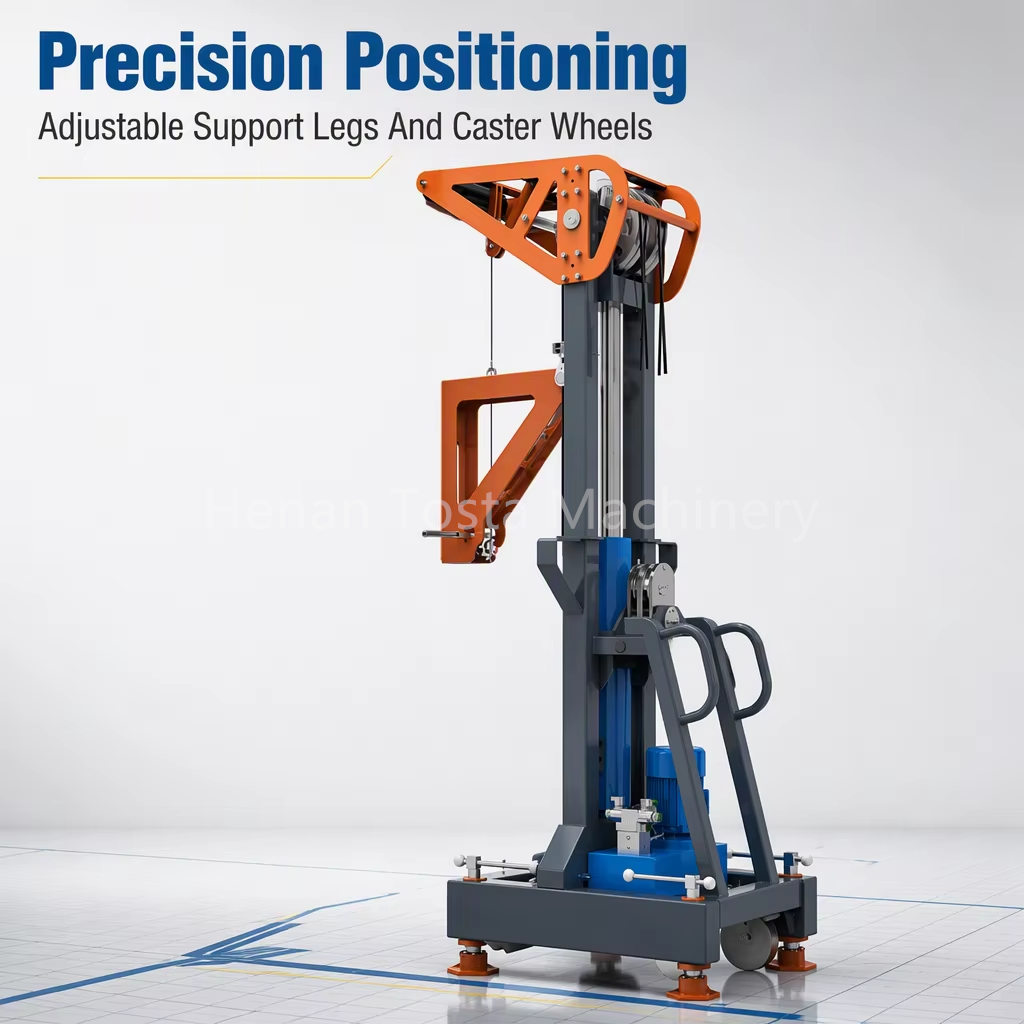
Equipped with casters, it can be manually pushed to the work position. The casters make it easy to control the direction of the equipment while it is moving, saving time and effort for moving the equipment.
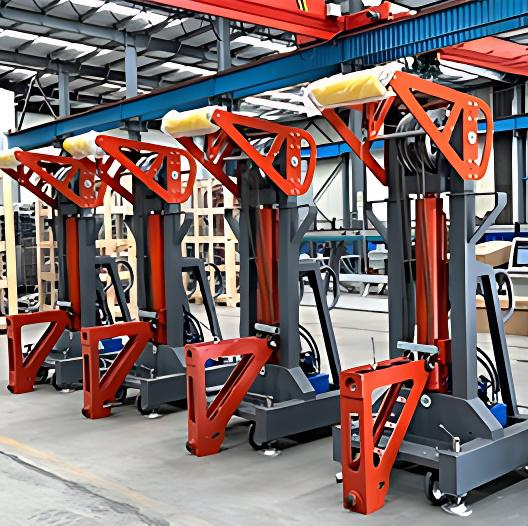
2、Faster cable connections and more convenient lifting controls:
The system uses quick-connect cables, allowing for rapid assembly and disassembly of the equipment's operating cables according to the user manual; it is operated wirelessly, allowing personnel to monitor the operation of each lift from any location, and can control individual lifts or the entire group of equipment simultaneously.
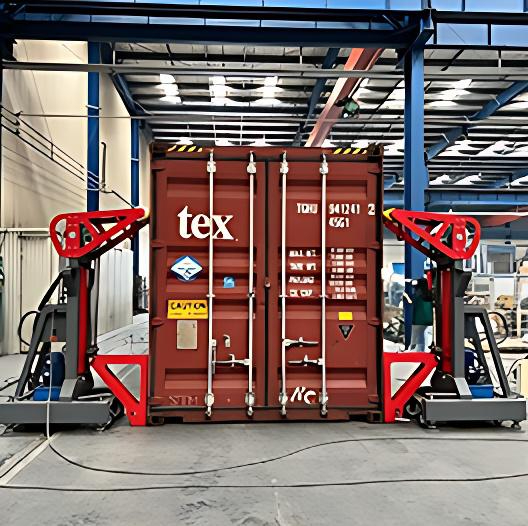
3、Safer reversing clearance:
When the equipment is placed, the distance between opposing directions can reach 2.9m. After the container is filled with goods, the vehicle can more easily and safely reverse into the designated area to load the container.
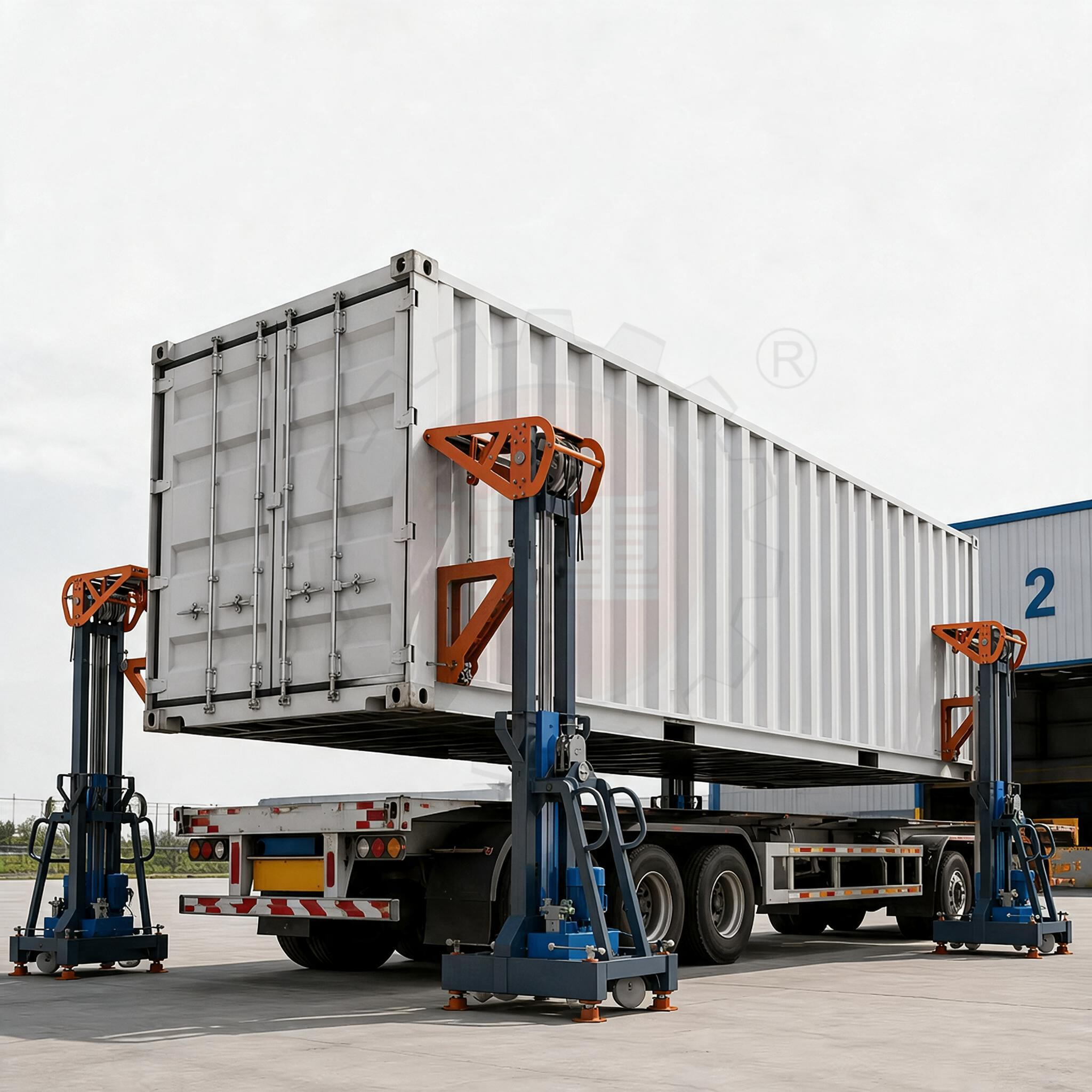
4、Adapt to more different work scenarios & containers:
The base is equipped with a leveling knob; simply turn the rotating rod to easily adjust the equipment to be perpendicular to the ground, making container lifting operations safer and more reliable. It is suitable for all sizes of containers on the market.
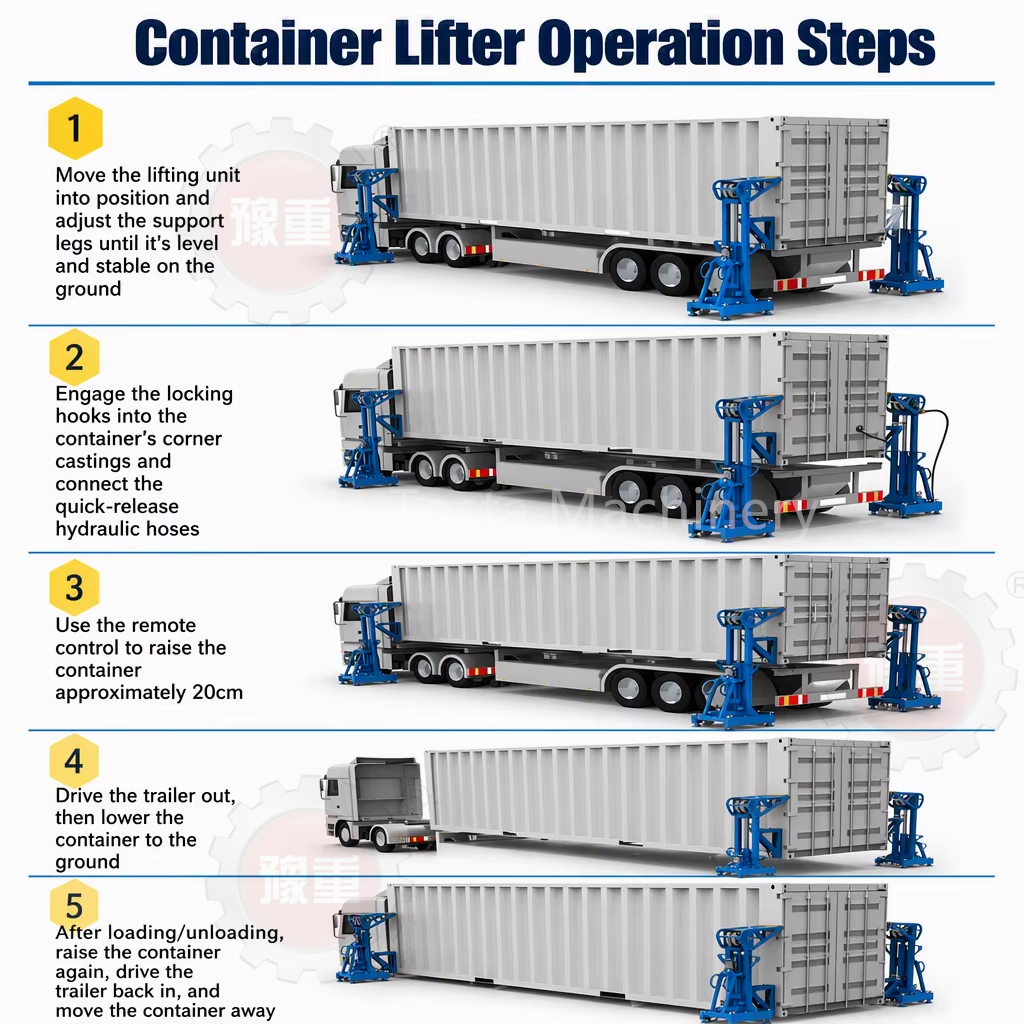
Container Lifter Operation Steps:
Application
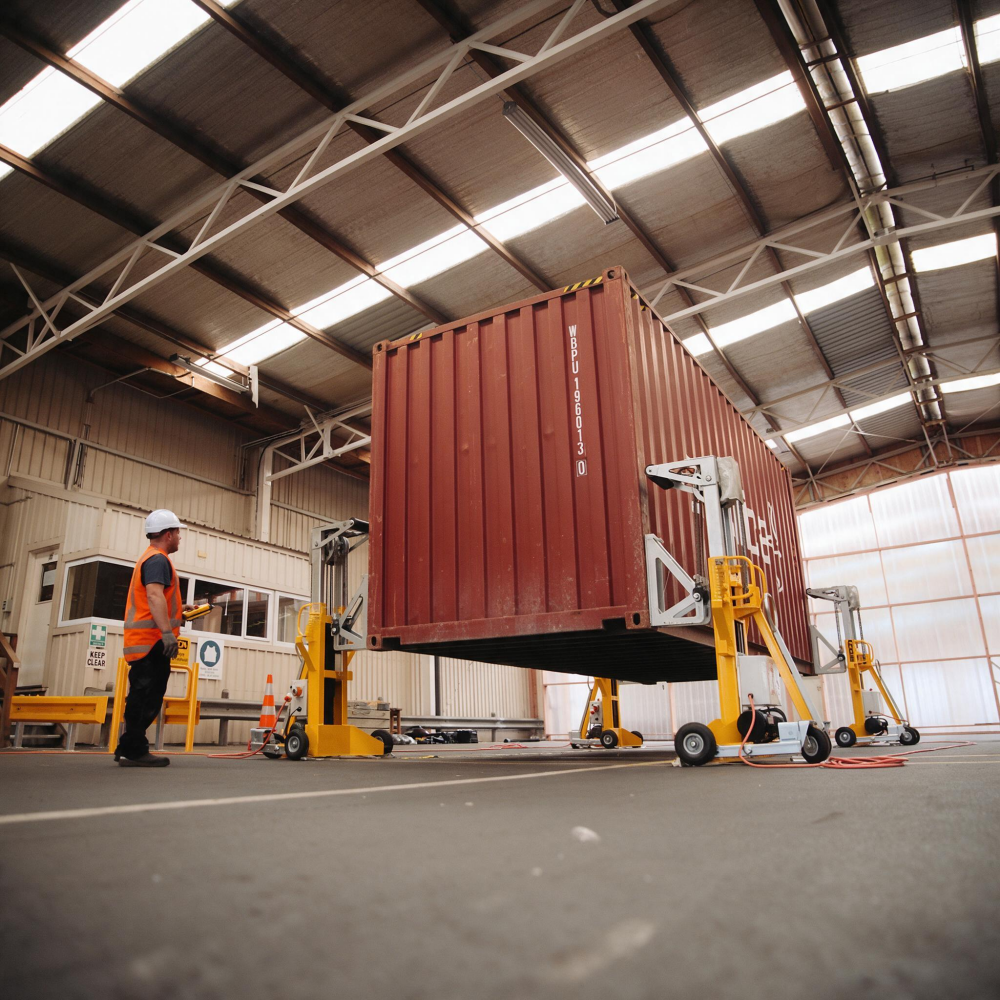
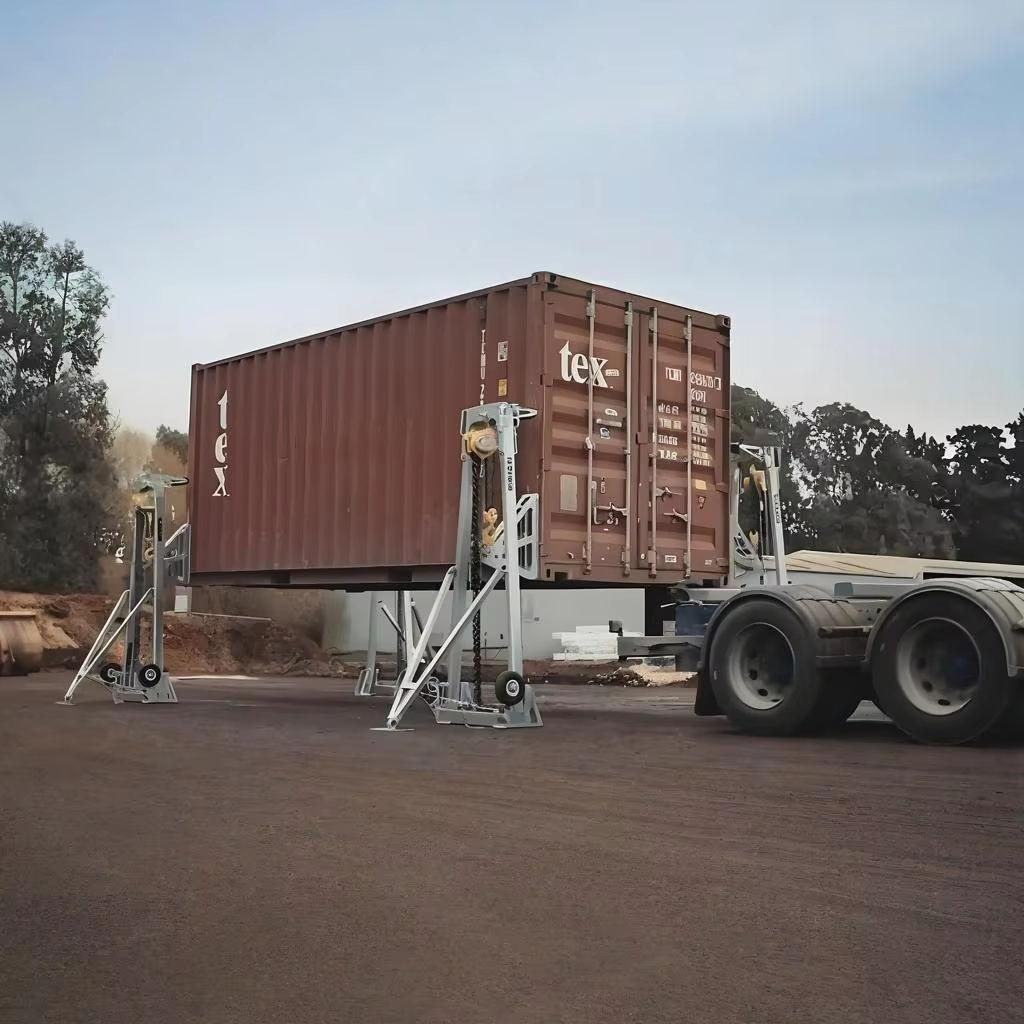
1、Logistics transfer & yard operations: Lift containers off the ground on arrival so tractor units can pull away or reposition quickly, cutting vehicle wait times.
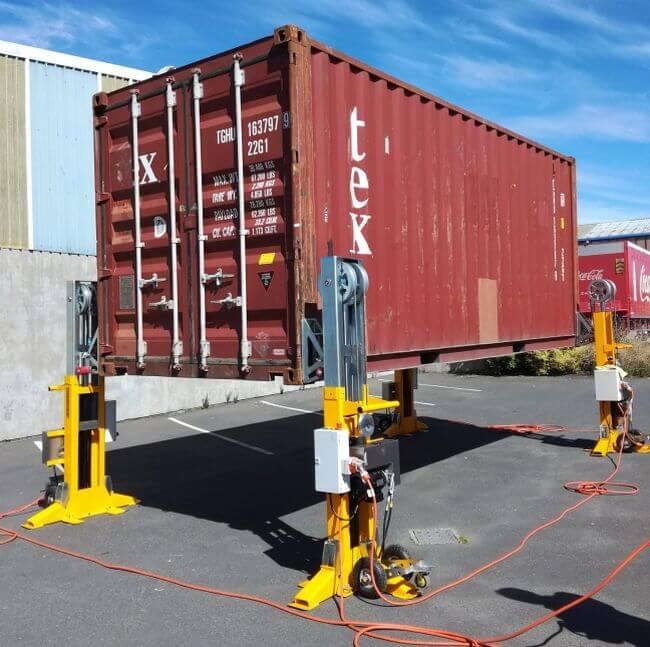
2、Construction & temporary site setup: On-site installation and levelling of modular buildings, portable cabins and other ISO-corner-fitted structures.
3、Warehouse/yard turnover: Container handling on-site for facilities without a fixed loading dock.
4、Specialized container handling: Off-ground servicing and transfer of modified units such as energy storage containers and telecom shelters.
5、Emergency & temporary deployment: Fast, self-sufficient loading/unloading at sites with no cranes or permanent lifting infrastructure.
Our Services:
Training:
Modular hands-on training programme
Highly qualified instructors and state-of-the-art equipment
Hands-on tasks to ensure that participants achieve all of their course goals
Training courses held at our training centre or locally
Installation:
Commissioning of crane installations
inspection and approval by our authorised crane inspectors
Spare Parts:
Fault analysis
Repairs carried out on site or at our Repair Center
Provision of genuine spare parts to replace damaged or defective parts
Recommendations for daily maintenance
Repair:
Genuine parts
Unsurpassed reliability
Long service life